Can Claude build a website? Yes. Running it is the hard part.
Lovable, Bolt, Replit and v0 build apps, Claude and ChatGPT write code, and Pixelesq runs your marketing site.
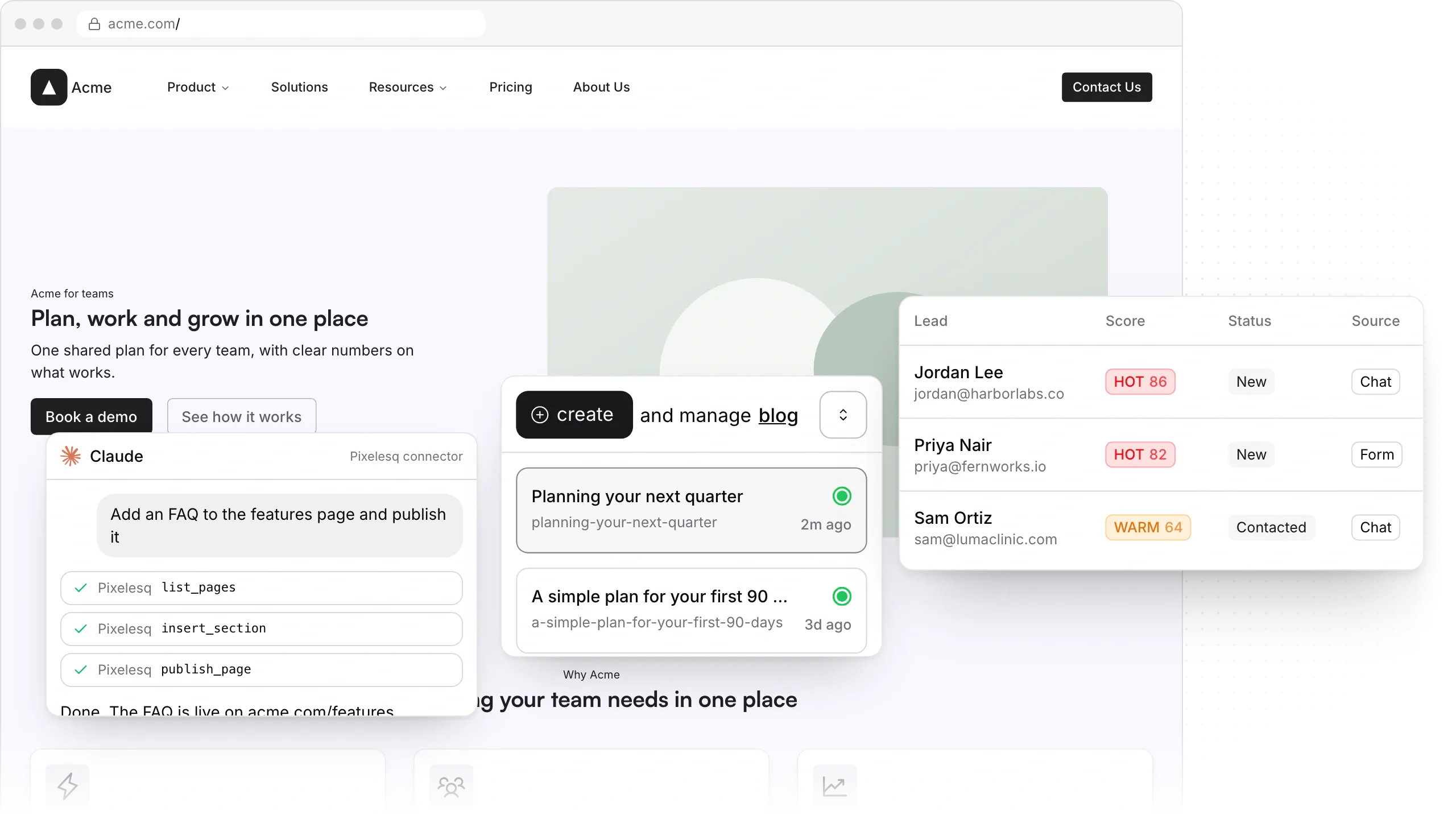
Should you build your marketing site with an AI app builder?
For apps and prototypes, yes: Lovable, Bolt, Replit and v0 turn a prompt into working code with hosting, and Claude and ChatGPT can write a site's code or share a page from the chat.
A marketing site is a different job. Marketers edit it every week, it needs to be found in Google and AI answers, and it should turn visitors into leads. Pixelesq is built for that job, with a CMS, AI answer tracking, forms and a scored lead inbox included, and Claude and ChatGPT can work on the site through its connector.
Where an AI-built marketing site gets hard to run
Each of these shows up once marketers take over the site. If one sounds familiar, here's how Pixelesq handles it.
Every change goes back through prompts
Visual editors handle small fixes, while new pages and sections go back through the AI, often on credits or tokens.
HOW PIXELESQ HELPS
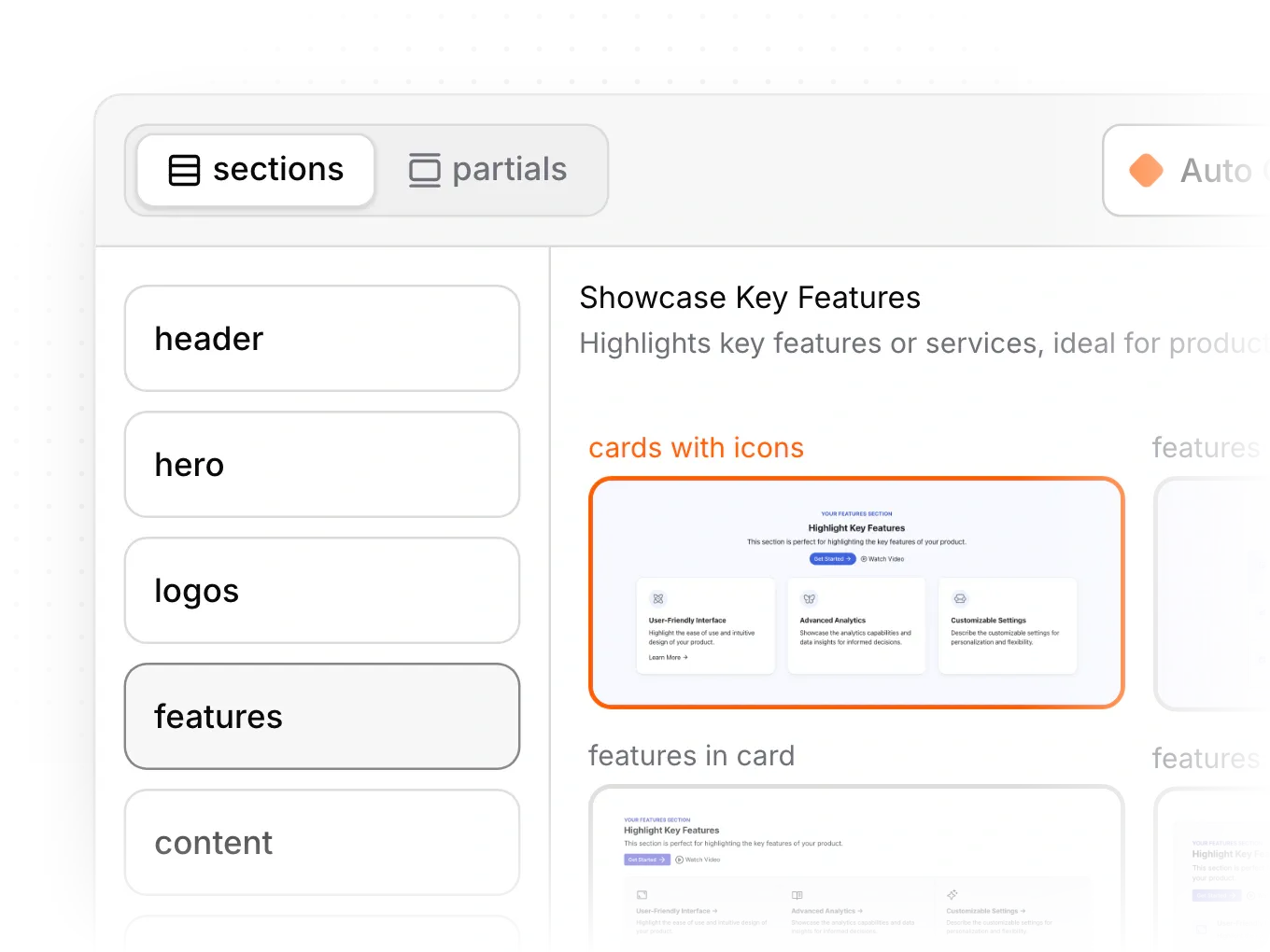
Edit in a side panel, or ask
Marketers add pages from 100+ ready sections in a side panel, or ask Pixel, with no AI credits.
Our blog needs a CMS someone connects
On Lovable, Bolt, Replit and v0, posts live in code or a CMS you connect, and Lovable's marketers page says most teams keep their CMS for the blog.
HOW PIXELESQ HELPS
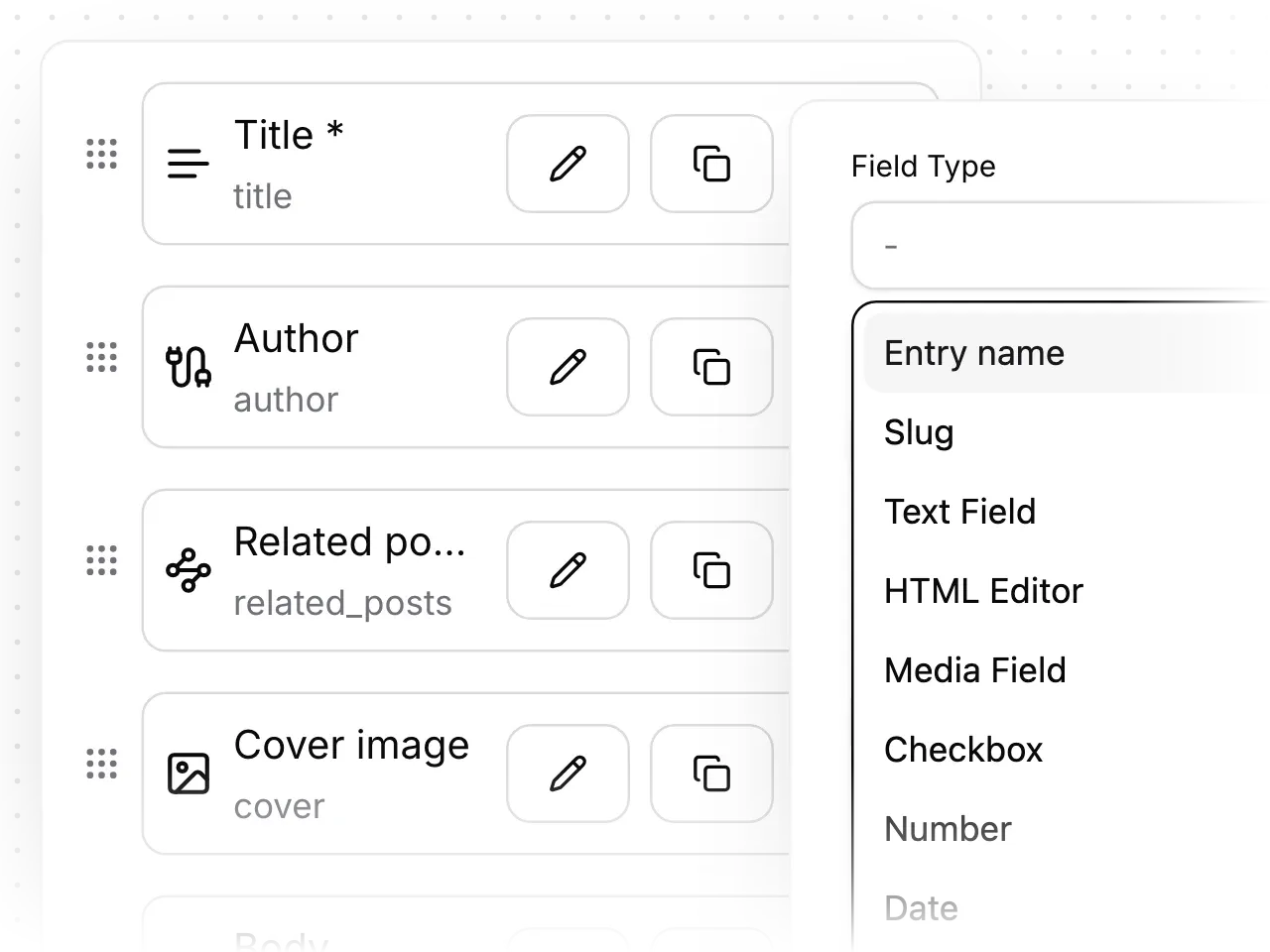
A CMS built in
Posts, case studies and any content type live in collections with their own fields and templates, next to your pages.
Form submissions sit in a database
Generated forms save to a database, and getting each inquiry to sales means connecting more tools.
HOW PIXELESQ HELPS
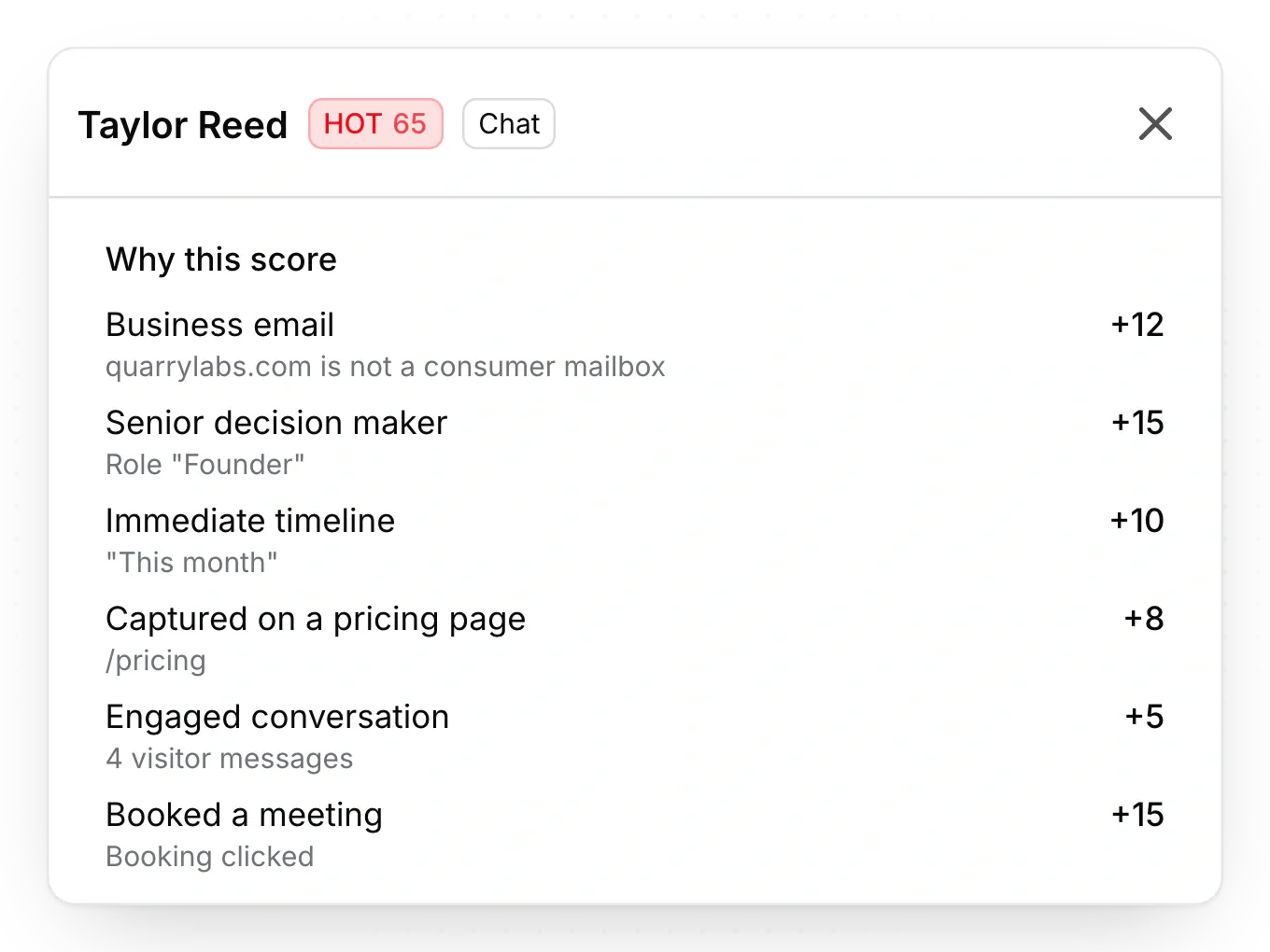
Every lead scored in one inbox
Forms and the AI chatbot feed one lead inbox, each lead scored 0 to 100, with alerts by email, phone and Slack.
Pixelesq vs AI app builders, side by side
How Pixelesq compares with Lovable, Bolt, Replit, v0, Claude and ChatGPT for a marketing site. Facts checked October 2026.
Marketing sites from sections, with no app logic or code export
Choose an app builder for a product, a tool or a prototype.
Side-panel editing for anyone, and Pixel when you'd rather ask
Marketers ship pages without spending a credit.
A built-in CMS with collections, fields and templates
Posts and pages live in one place your team already uses.
Hosting, SSL and your own domain on every plan
One bill covers the site and where it lives.
Structured data on every page, plus rank and AI answer tracking
You see where you rank and where AI answers mention you.
Forms and an AI chatbot feed one inbox, every lead scored with reasons
Sales calls the hottest leads first, with the reasons in front of them.
Also built into Pixelesq
The rest of the work a marketing site needs, in the same account.

Edits by asking Pixel, Claude or ChatGPT
Describe a change in plain words, in the app or from your AI assistant, and review it before it publishes.
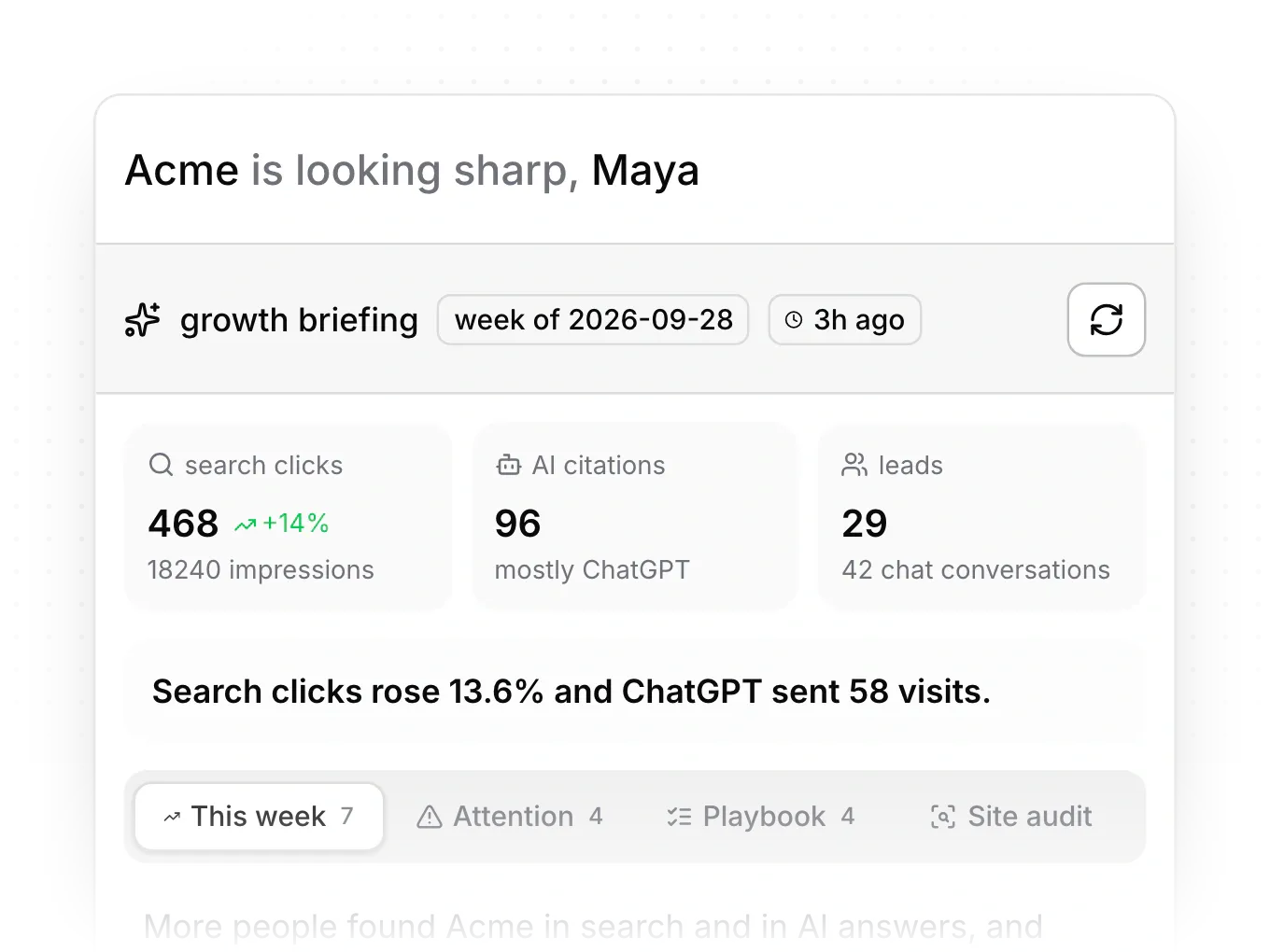
A briefing every week
A plain-language summary of what changed in search, AI answers and leads, with next steps.
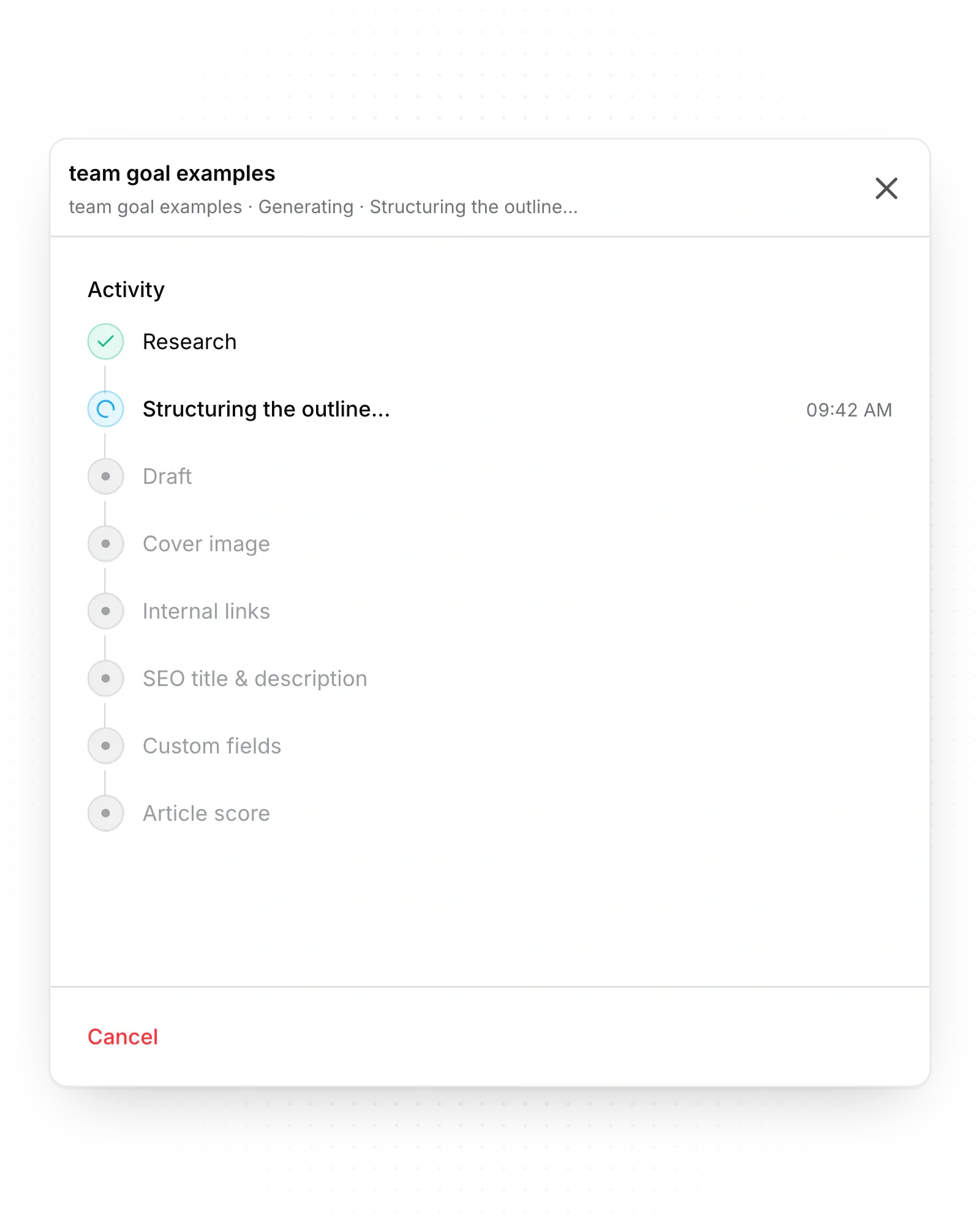
Articles researched before they're written
The content engine reads the pages that rank today, then drafts articles for your team to review.
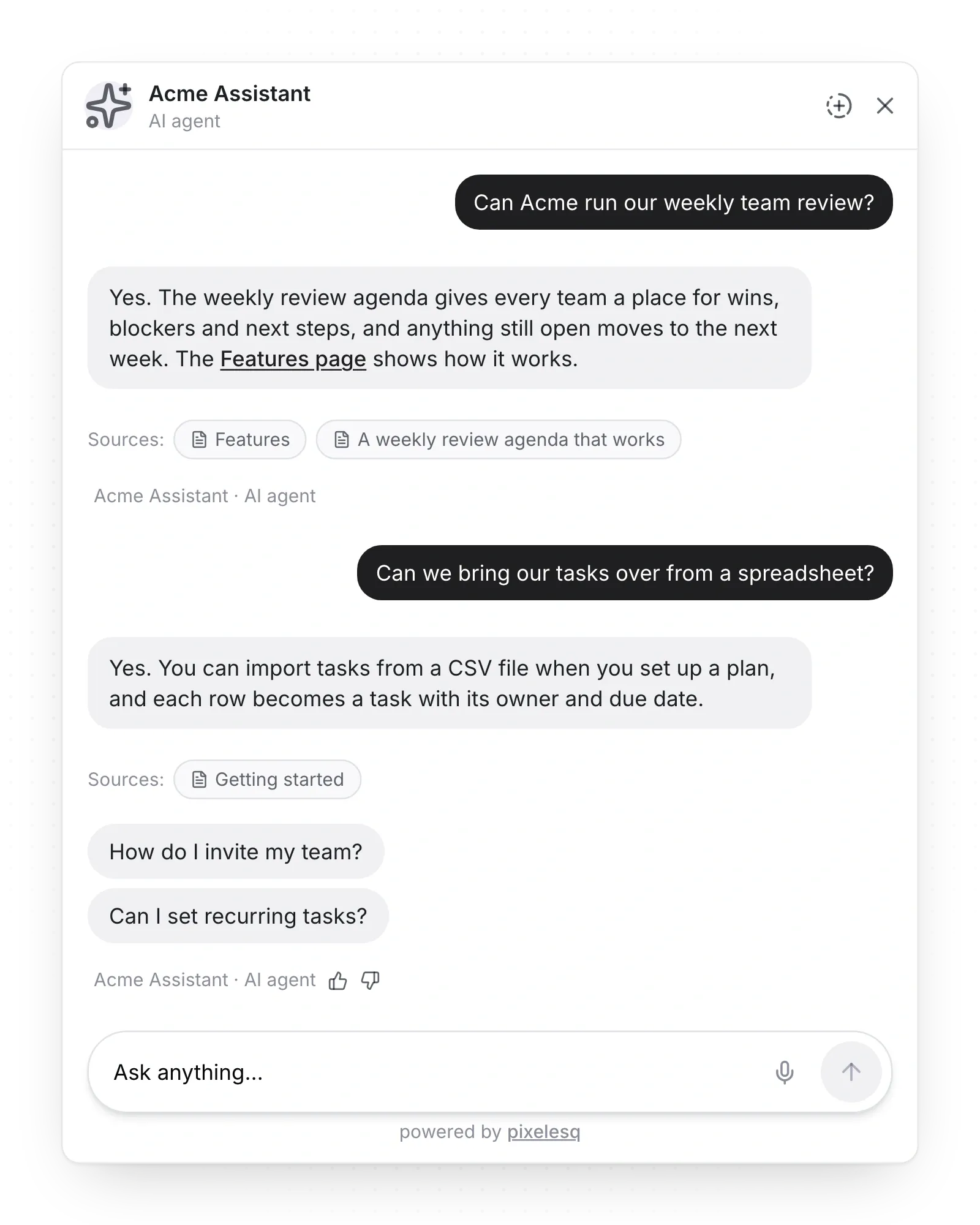
A chatbot that knows your site
It answers visitors from your own pages at any hour, then captures their details as a lead.
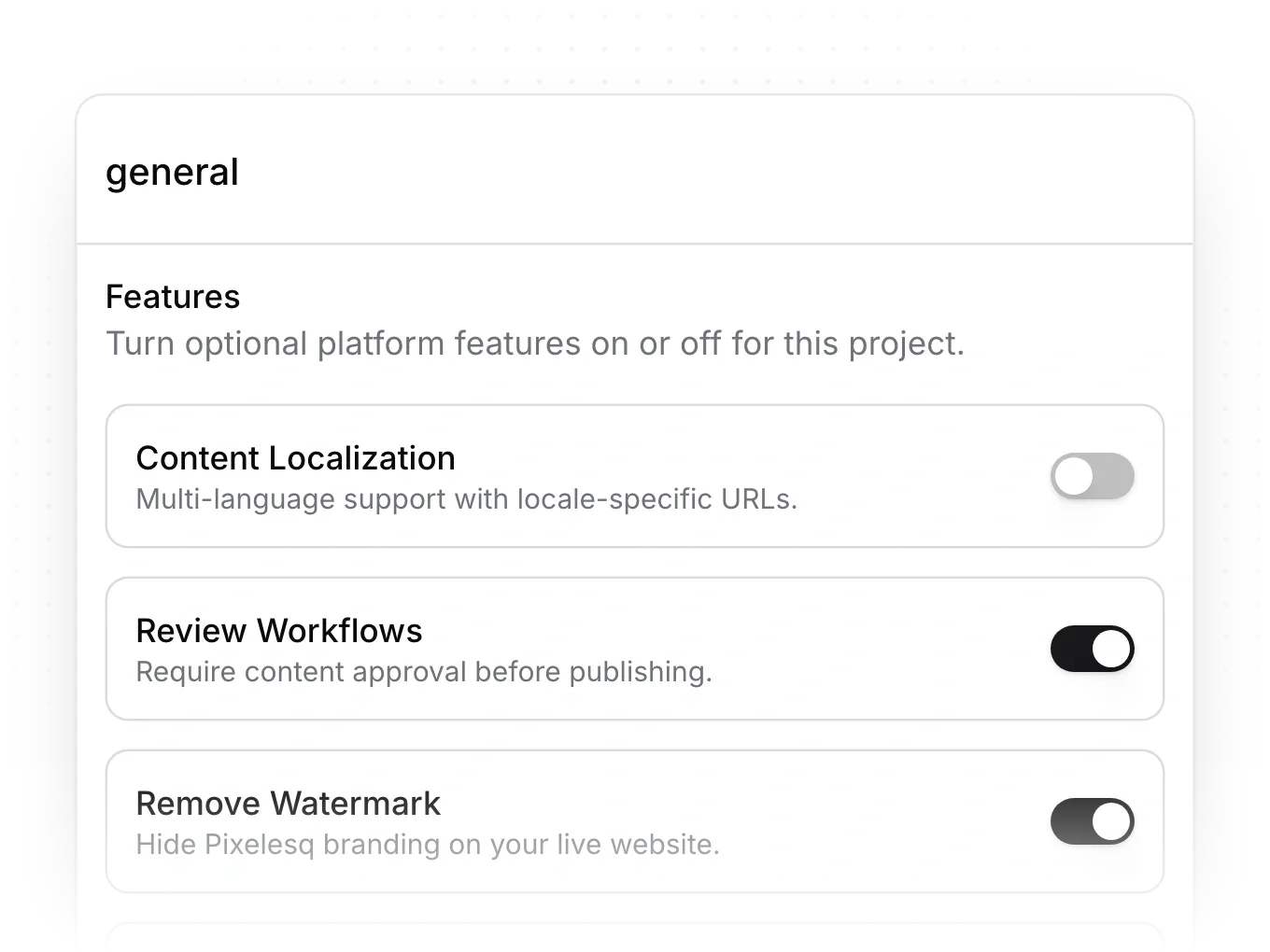
Approvals, versions and an activity log
Turn on reviews to hold every publish, and restore any earlier version of a page as a draft.
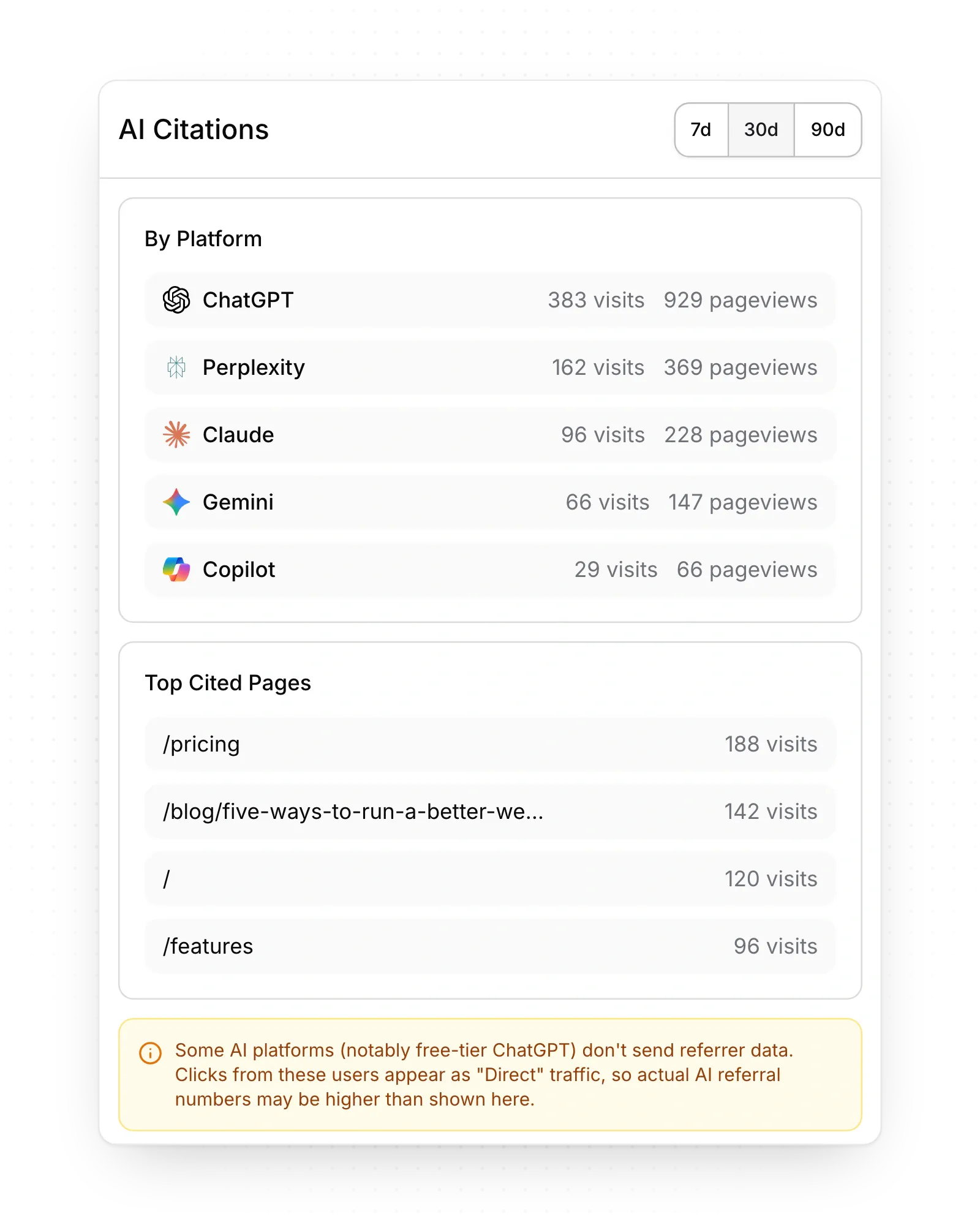
Analytics that count AI visits
See visits from ChatGPT, Perplexity, Claude and other assistants, with nothing to install.
Questions people ask about building a website with AI
Answers on Claude, ChatGPT, cost, Lovable alternatives, AI app builders and showing up on Google.
Yes, Claude can write a full website's code, and it can make single pages in a chat. Claude Code, included with paid Claude plans, writes and edits a site's files in your codebase, and a chat artifact is a single page or small tool you can share by link. To run it as your business site, you still need hosting, your own domain, forms that reach your team, search basics and a way for teammates to edit. Pixelesq includes those, and Magic Create drafts your brand profile and a first homepage from your current site or a sentence about your business.
Both can write website code, so the better pick is usually the one your team already uses. The bigger difference is where the result lives: Claude shares single-page artifacts by link, and ChatGPT's Sites, a beta on Plus and higher plans, hosts websites and can use your own domain. Either one can also work on a Pixelesq site through its connector, so your team can switch assistants while the pages, content and leads stay in one place.
Claude can be used at no cost, with paid plans per person, and the website adds costs of its own. Claude Code, which works on multi-file sites, comes with the paid plans, and every plan has usage limits that reset over time. You'd also pay for hosting, a domain, a form service and any analytics you add, plus the time to connect them. Each Pixelesq plan covers one site, with hosting, SSL, forms and analytics included and no AI credits, from $19 to $299 a month, and you start with a 14-day trial with every Scale feature and no card. See what each plan includes.
For apps, the closest Lovable alternatives are Bolt, v0 and Replit, which also build from prompts. For a marketing site, the better question is who runs it after launch. Lovable is strong for apps and prototypes, and new Lovable apps come with server rendering, sitemaps and an SEO review, while posts live in code or in a CMS you connect. If marketers will publish pages, posts and case studies every week and want leads from the site, Pixelesq gives them sections, a built-in CMS, forms and a scored lead inbox.
Yes, they can publish a marketing site, and several now handle search basics. Lovable renders new apps on the server, Bolt adds SEO boosting on its Pro plan, Replit rates each published app's SEO, and v0 builds on Next.js. Day to day is where they differ from a website builder: changes happen by prompting or in a visual editor, blog posts live in code or a connected CMS, and form submissions go wherever the generated code sends them. That suits a team with a developer on hand, and Pixelesq suits a marketing team that runs the site itself.
It can, when pages arrive as full HTML with titles, descriptions and a sitemap. Crawlers read the HTML a page sends, so rendering matters: Lovable has rendered new apps on the server since May 2026, and v0 uses Next.js server rendering. No tool can promise rankings, which depend on what you publish and how well it answers searches. Pixelesq serves every page as full HTML with structured data, a sitemap, llms.txt and canonical tags, and its AI answer tracking shows which AI answers mention you.
Let Claude and your team run the site
Have Pixel draft your first page, then connect Claude or ChatGPT to keep editing it from the chat.


