AI visibility tracking with SEO handled for you
Structured data on every page, a sitemap and llms.txt for crawlers, and tracking that shows how ChatGPT, Claude, Gemini, Perplexity and Google AI Mode answer your buyers.
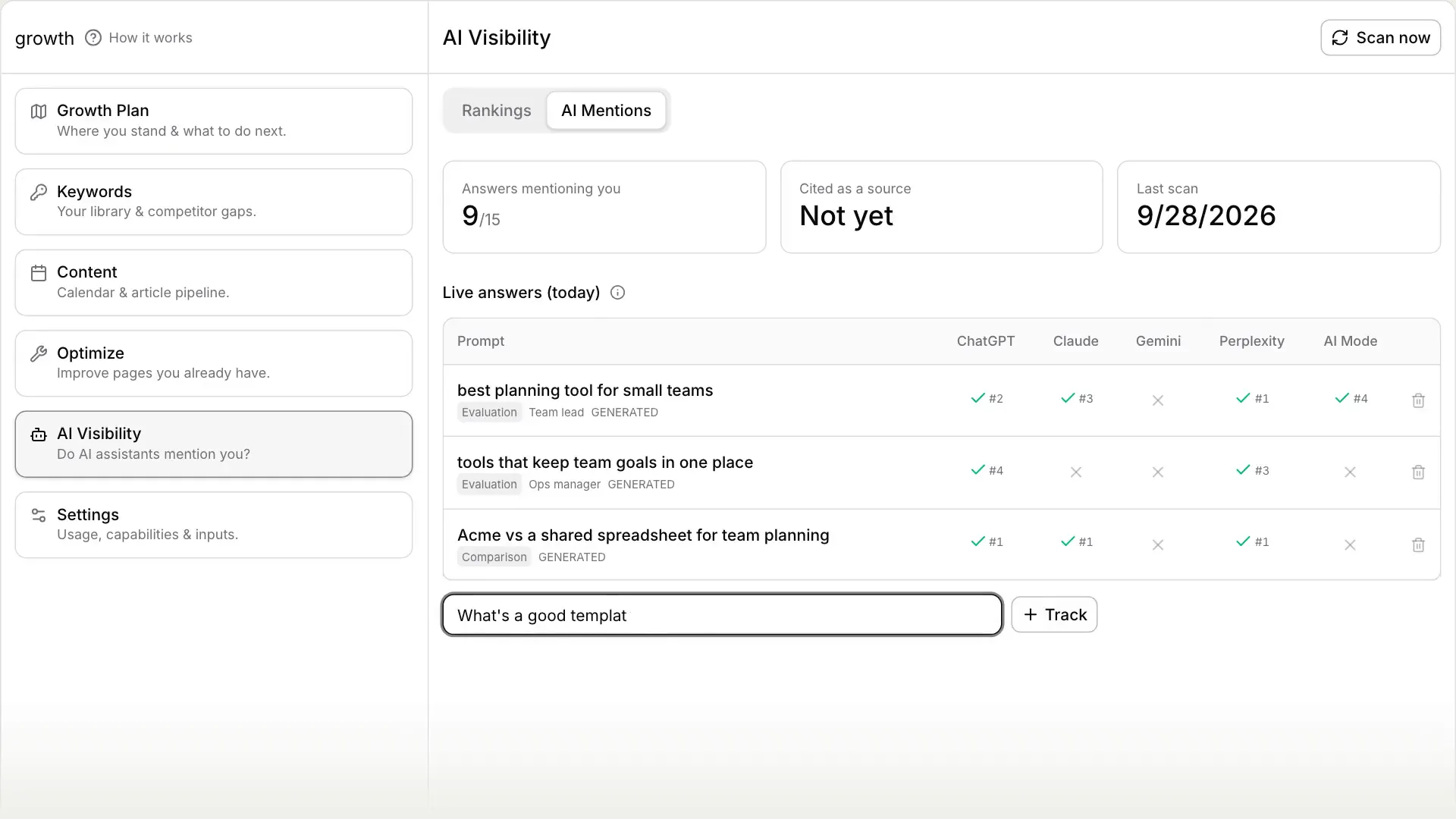
What does Pixelesq handle for SEO and AEO?
SEO helps your pages rank on Google. AEO, answer engine optimization, helps AI assistants understand your site and cite it in their answers. Pixelesq handles the groundwork for both on every page: structured data, a sitemap, llms.txt and open access for crawlers. Then it measures the results, with Search Console data in your dashboard and checks of what AI assistants say when buyers ask about your market.
SEO groundwork that looks after itself
Your sitemap and structured data keep up with every publish, and no plugins need updating.

Know where you stand in AI answers
Stop guessing whether AI assistants mention you, and see the answer question by question.
Numbers you can take to leadership
Report AI visibility and search performance with real figures when someone asks how you're doing.
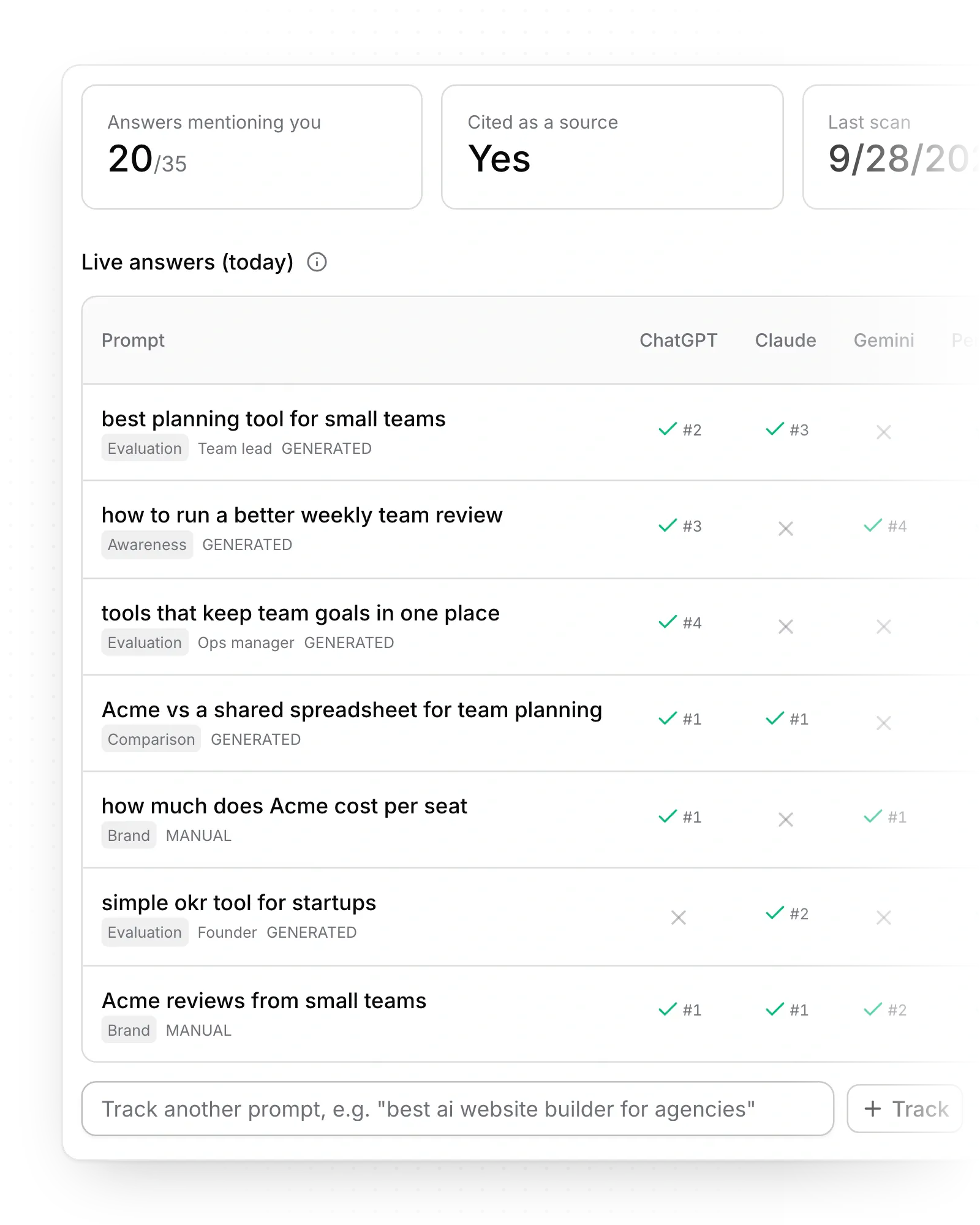
See how AI assistants answer your buyers' questions
AI proposes the questions buyers ask at each buying stage, and you can add your own.

ASK PIXEL
Which of our pages do AI assistants send visitors to?
Pixel reads your analytics for the last 30 days and lists the pages that visitors from AI assistants landed on, with the visits each one received, plus a total for each assistant. Every figure comes straight from your analytics.
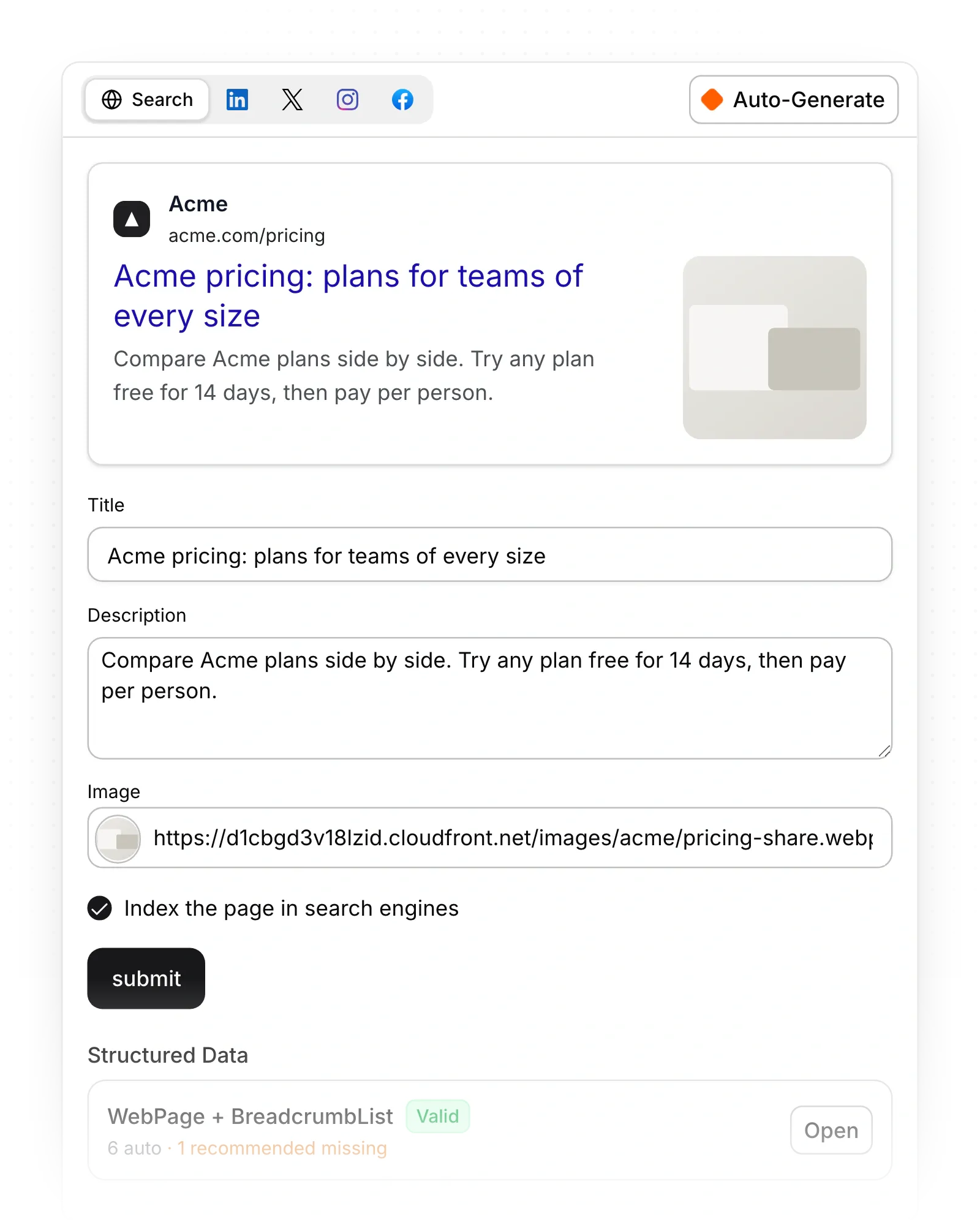
Titles and descriptions written for new pages
At a page's first publish, AI writes whatever is empty: title, description, share image and structured data.
ASK PIXEL
Write a meta description for our pricing page
Pixel reads the pricing page, writes a description that sums it up in your voice, and saves it to the page's SEO settings, where it takes effect right away. Ask again for any other page that needs one.
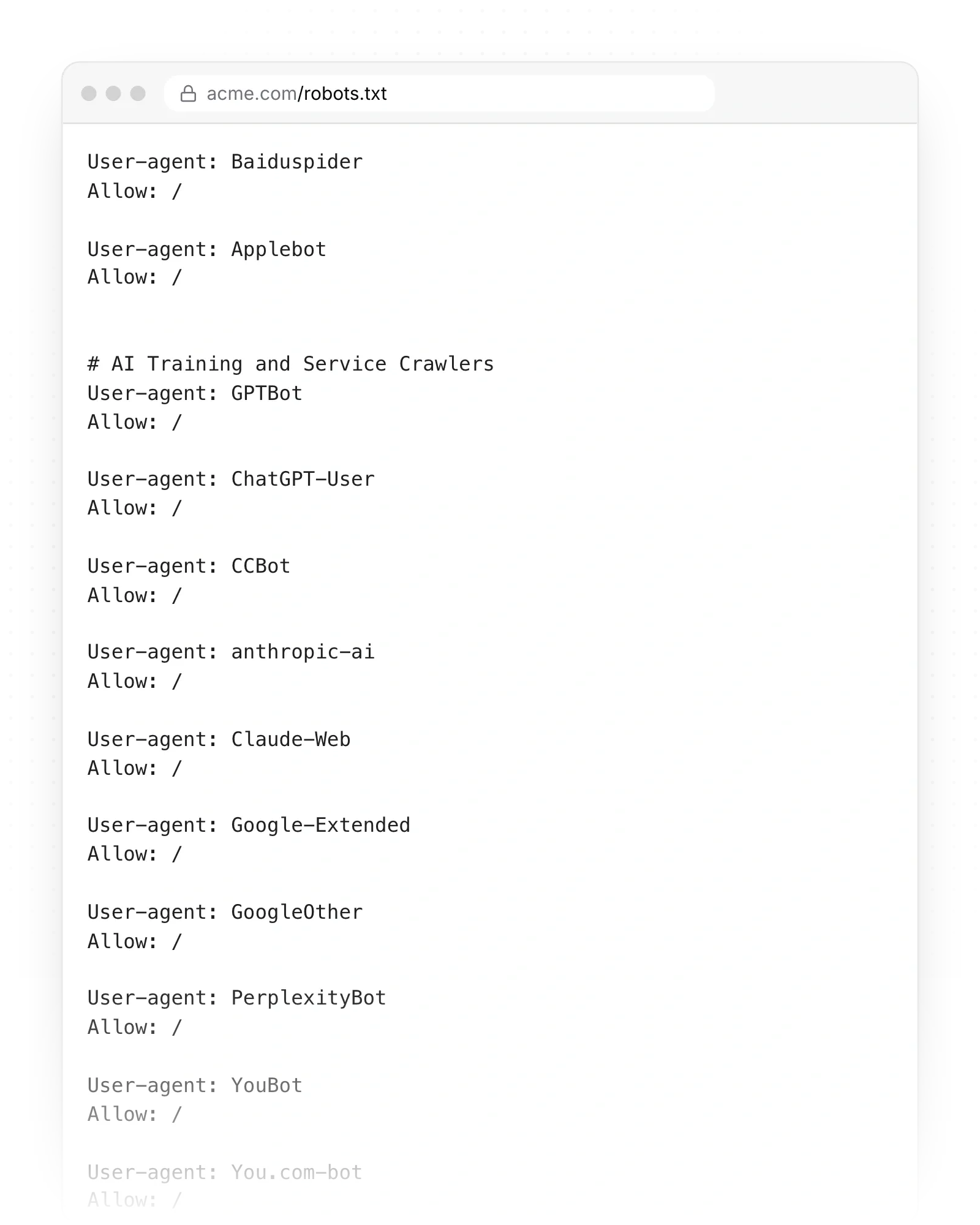
Open to AI crawlers on your own domain
Robots.txt welcomes search and AI crawlers, and llms.txt lists your pages in plain text for AI tools.
ASK PIXEL
Make sure AI assistants can read our site
Pixel checks your settings and switches on the sitemap and llms.txt if either is off. On your own domain, robots.txt already allows crawlers such as GPTBot and PerplexityBot, so they can read every published page.
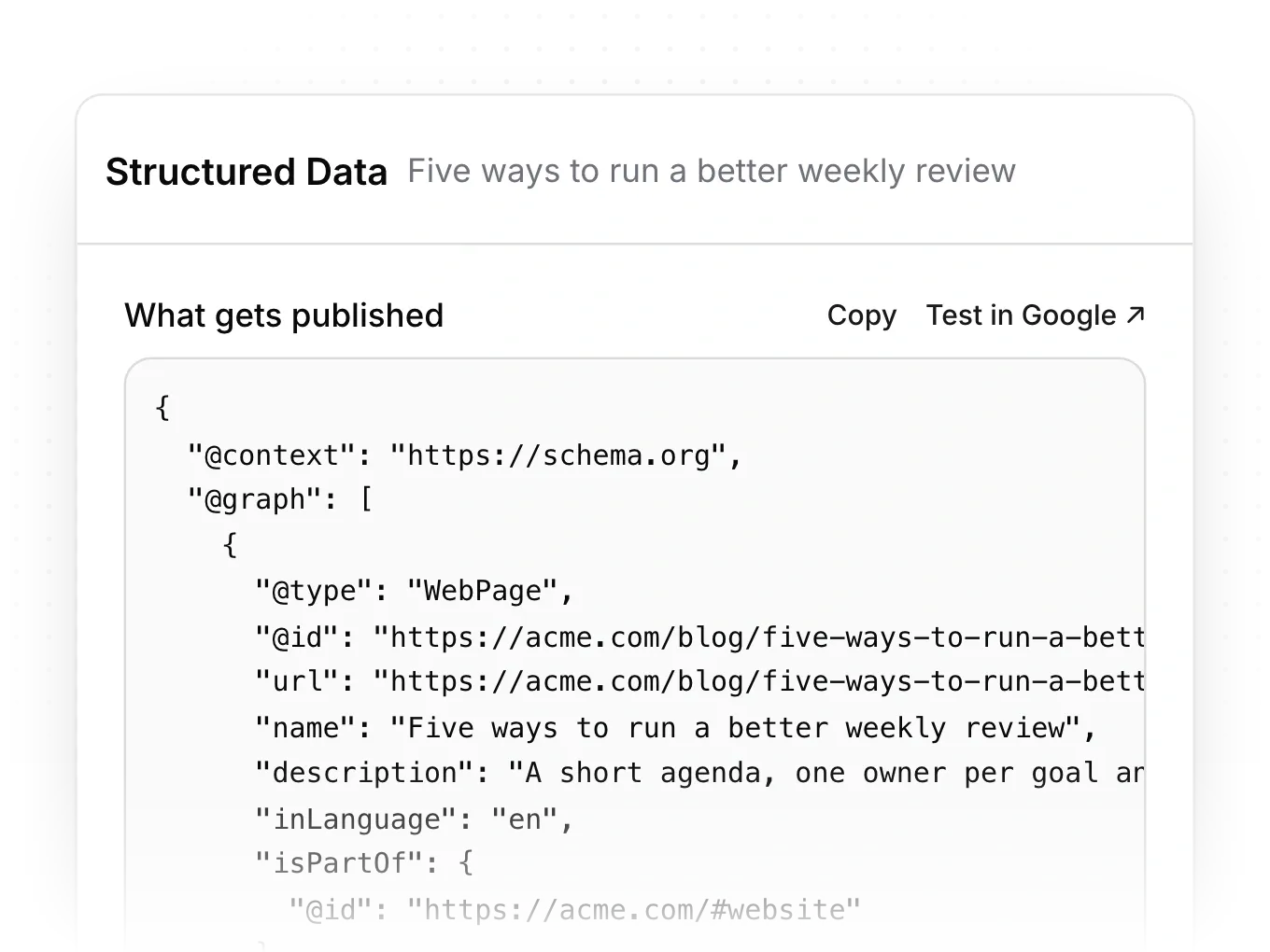
Structured data on every page
Each page describes your business and its content in schema.org markup that search engines read.
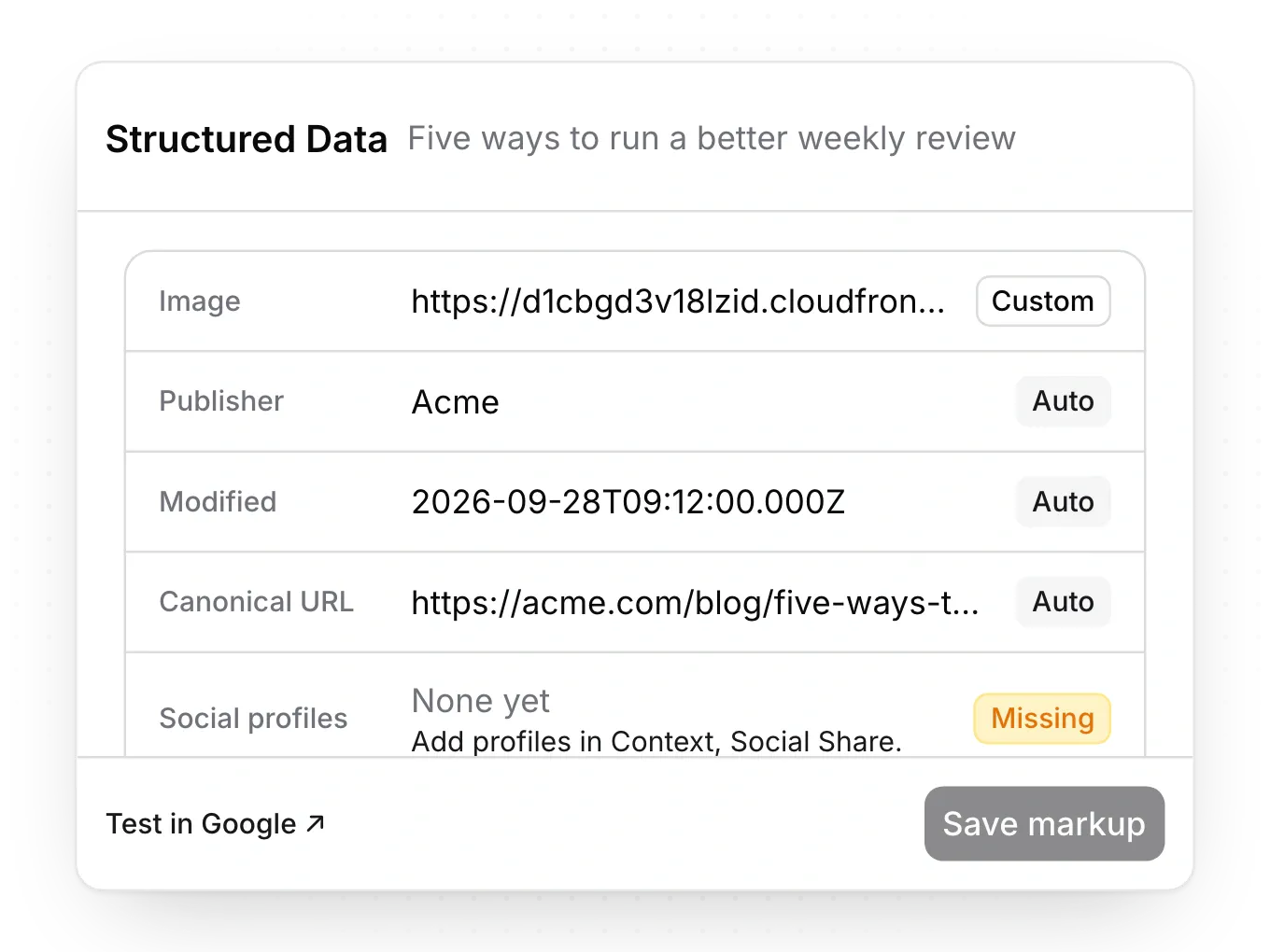
Structured data you can check
See which facts are automatic, custom or missing, with a link to Google's Rich Results Test.
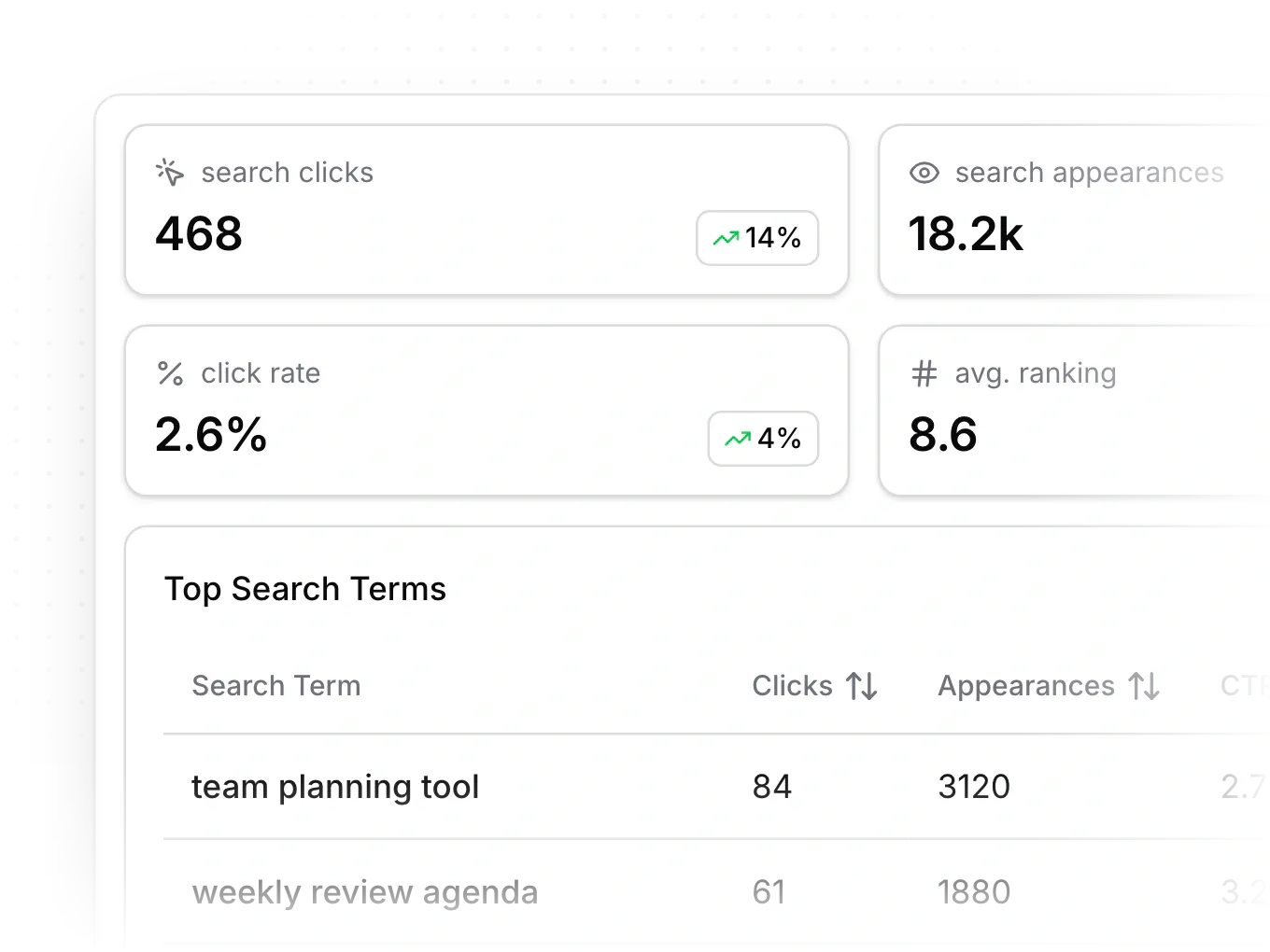
Search Console in your dashboard
Connect once to see clicks, top searches, index status and mobile speed without leaving Pixelesq.
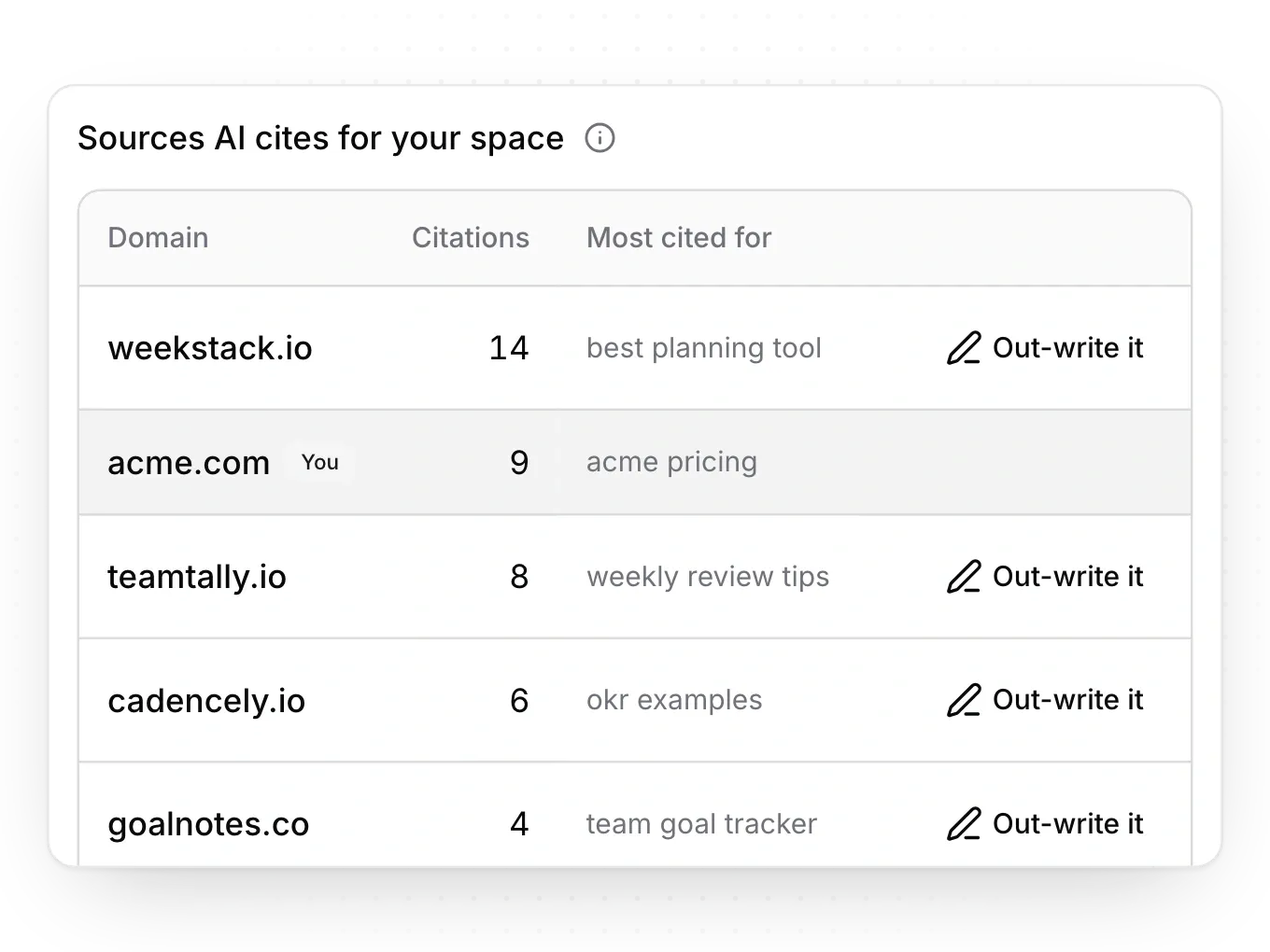
The sources AI answers rely on
See which sites AI assistants cite for your questions, and queue an article on the same question.
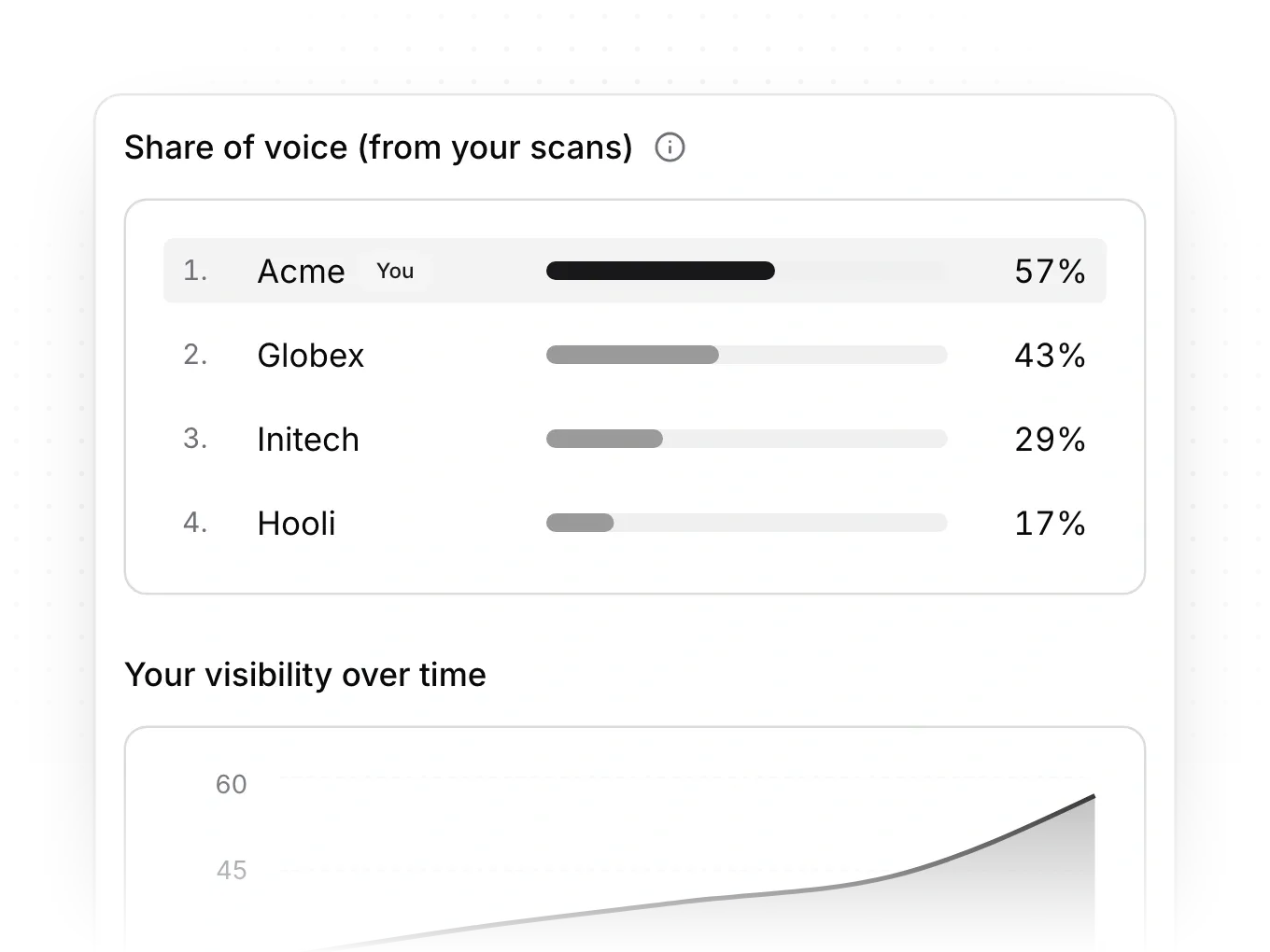
Your share of AI answers
A leaderboard shows how often AI answers name you and each competitor, with your trend over time.
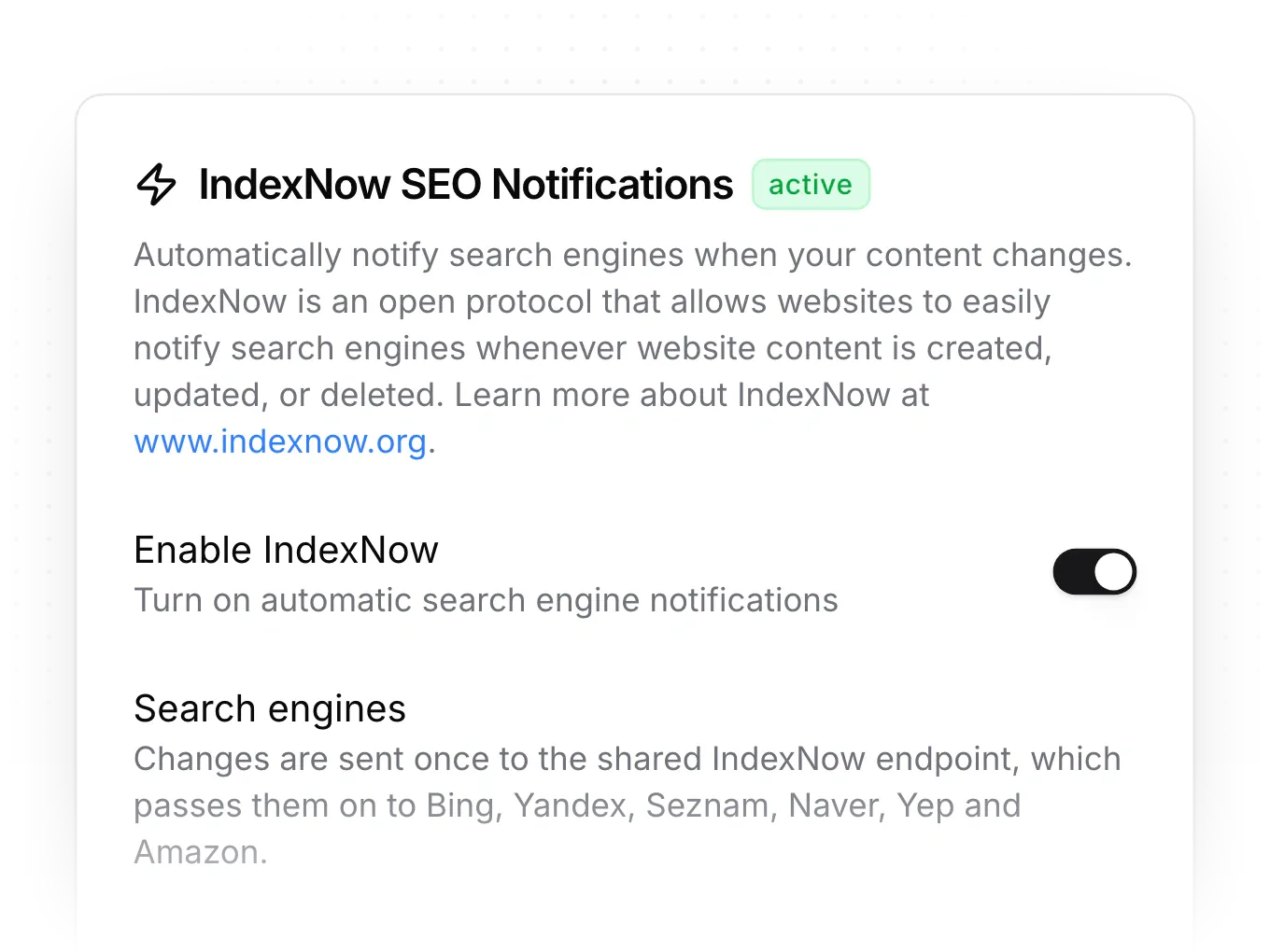
Tell search engines when you publish
Switch on IndexNow and each publish tells Bing and other participating search engines which pages changed.
Frequently Asked Questions
No tool can promise that, because each assistant chooses its own sources. What Pixelesq controls is whether assistants can find and read your site: their crawlers are welcome on your own domain, including the ones ChatGPT and Perplexity use for search, and every page carries structured data. AI visibility tracking then shows which of your buyers' questions mention you and which sites get cited instead, so you know where to publish or get mentioned next.
Each check asks your questions in ChatGPT, Claude, Gemini and Perplexity with web search on, plus Google AI Mode, and records whether you're mentioned, where you appear and which sources are cited. Answers change from one run to the next: a 2026 study found the same question returned the same list of brands less than 1% of the time. Read the trend across your questions and checks, and treat any single answer as one sample.
Yes. Google has said it doesn't favor one CMS or site builder over another; it looks at the pages themselves. Pixelesq pages are fast by default and come with what search engines need: clean addresses, structured data, a sitemap, canonical tags, titles and descriptions, and redirects when an entry moves. On a WordPress site those usually come from plugins you maintain; here they're built in.
They help machines read your site, but neither is a ranking switch. Google says structured data helps it understand a page, and that its AI features need no special markup or AI text files beyond the usual SEO basics. llms.txt is a proposed standard for giving AI tools a plain-text guide to a site, and it's still a proposal. Pixelesq adds both for you, so you get whatever they bring with no extra work.
Yes. Google says the same SEO basics apply to its AI Overviews and AI Mode, which draw on pages it can crawl and understand. The work overlaps: a clear, well-structured page helps you rank and gives AI assistants something worth citing. Pixelesq covers the technical side and tracks both, so you can see which one is paying off.
The basics are automatic: the sitemap, robots.txt, llms.txt, canonical and social tags and structured data, plus any title, description or share image you left blank when a page first goes live. On any page you can change the title, description and share image, switch indexing off, and add custom structured data where the automatic facts fall short. The structured data panel shows what came from where.


