Every brand and regional site on one platform
An enterprise CMS your marketing team runs, with roles, approvals, an SLA and white-glove migration.

What is an enterprise CMS, and why Pixelesq?
Every change waits on developers or an agency
A headline or a new landing page needs a ticket, and campaigns wait behind platform work.
How Pixelesq helps
On-brand sections marketers can edit
Marketers edit text, images and entries in the no-code builder, and layouts hold on every screen.
Edit by asking Pixel
Ask Pixel in plain words to update pages, entries or SEO fields, or connect Claude or ChatGPT.
What changes
Campaign pages ship without tickets, and developers get their time back.

Costs that climb at every renewal and upgrade
License jumps, upgrade projects and hosting bills are hard to forecast, and each one needs budget approval.
How Pixelesq helps
Hosting and updates handled
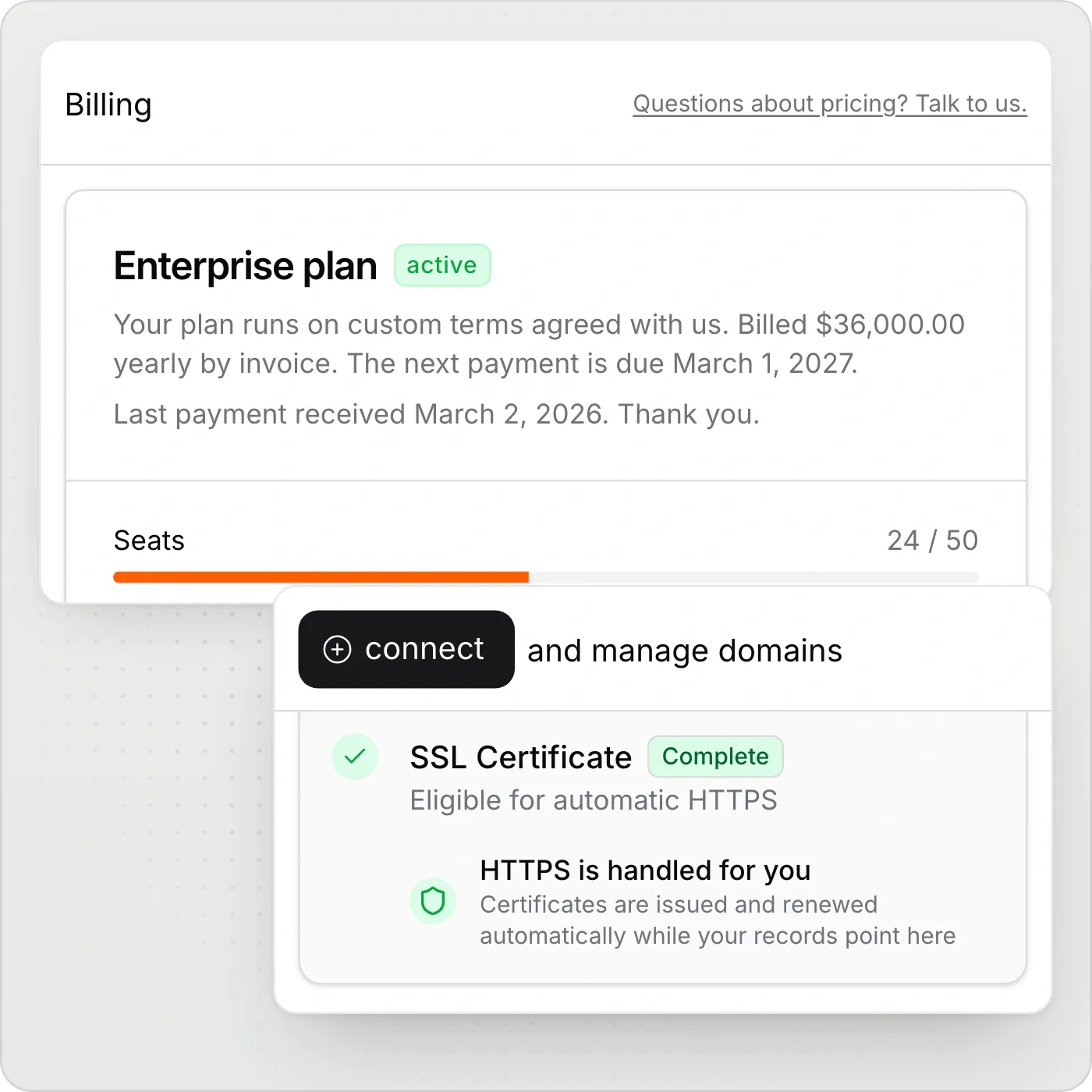
Hosting, SSL and platform updates come with every site, with no plugins to patch or servers to run.
Annual terms and invoice billing
The Enterprise plan sets limits around your sites, billed by invoice on annual terms.
What changes
One annual contract covers the platform, hosting and support.
Too many sites on too many systems
Brands and regions run on different platforms, so nobody can see or govern them all.
How Pixelesq helps
Every site under one login
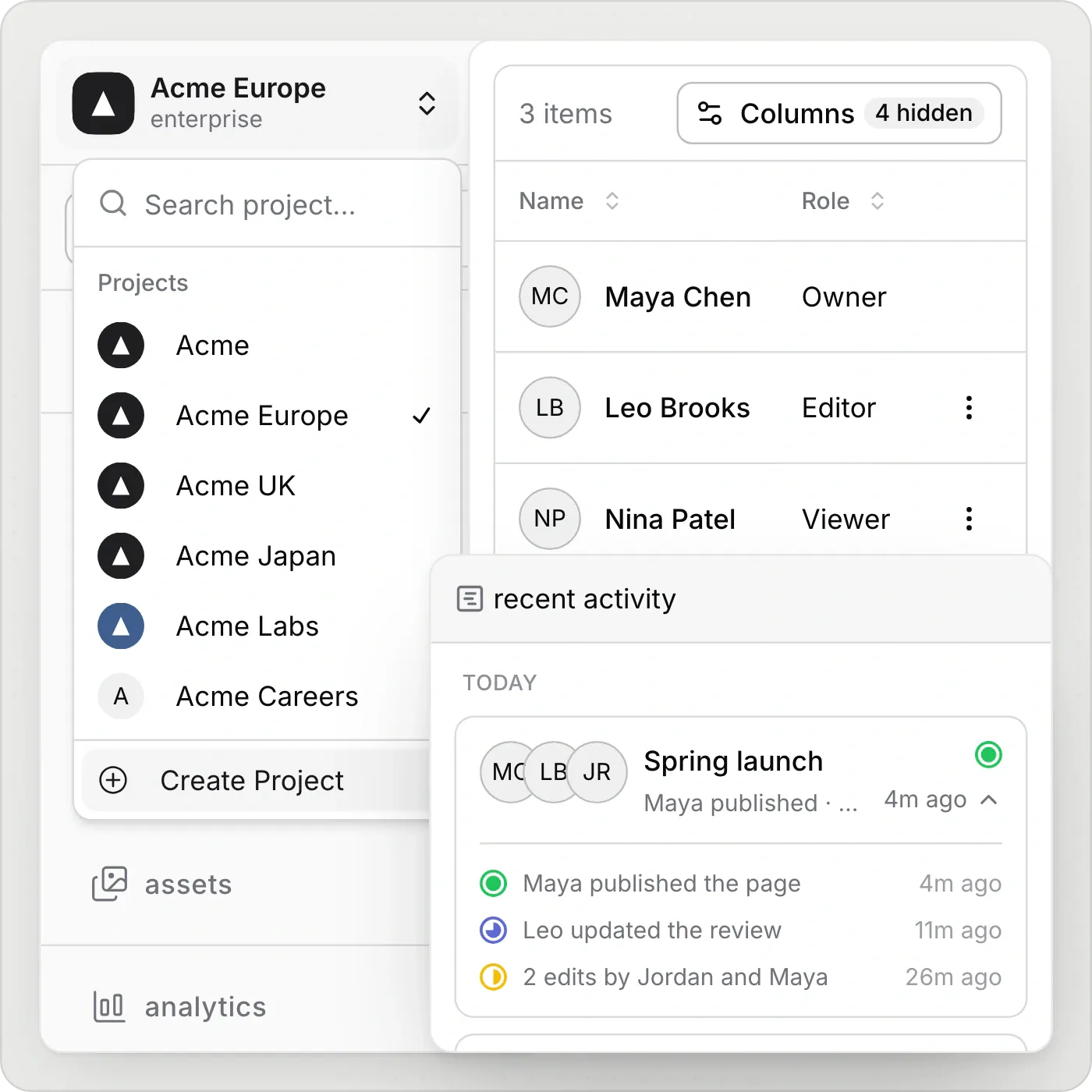
Each brand or region gets its own site, team and domain, one click away from the rest.
Roles, approvals and an activity log
Owner, Editor and Viewer roles, approvals before publishing, and an activity log of who changed what.
What changes
Every site runs the same way, and every change has a name on it.
Built for large teams
What comes with the Enterprise plan, from the move itself to support and reporting once you're live.

We move your sites for you
Our team rebuilds each site on Pixelesq, with a redirect for every old address.

Support with an SLA behind it
Enterprise plans include a service-level agreement and dedicated support for your whole team.

Fits the tools you already use
Leads flow to HubSpot, Zoho CRM or any tool by webhook, plus custom integrations.

Rankings checked every day
Rank checks run daily with AI Overview citations, and AI visibility shows how assistants answer.

Content at any volume
Collections turn products, locations and case studies into pages, at the volume you need.

Every page ready for AI answers
Every page ships with structured data, a sitemap and AI crawler access, on every site.
Questions enterprise teams ask before they switch
It's a content management system built for large organizations with many sites and teams. It controls who can publish what, keeps many sites running on one standard, and comes with support and contract terms a company can rely on. Pixelesq does this for marketing-led companies: every site on one platform, roles and approvals on each, and an SLA behind it.
No. Pixelesq is a hosted, visual CMS: marketers build and publish pages directly, with no front end to build or maintain. Content lives in collections with their own templates, and search basics like structured data come built in. If you mainly need to send content to apps and devices through an API, a headless CMS fits better.
Enterprise pricing is agreed up front and billed by invoice on annual terms. It's based on your sites, limits and support, with no AI credits to count. Single-site plans run from $19 to $299 a month, and the pricing page shows what each includes.
Every move carries some risk, and white-glove migration is built to keep it small. Our team moves your sites with a redirect for every old address, and after launch Search Console shows whether Google has picked up each new page. You review the new site before it goes live.
Yes. Each brand or region runs as its own site on Pixelesq, with its own team, domain and settings, and people switch between the sites they work on in one click. Enterprise limits are set around your volume, and we set up Enterprise terms around all of your sites.
Yes. Everyone has an Owner, Editor or Viewer role on each site, approvals can hold every publish or schedule until someone signs off, and the activity log shows who changed what and when. Any earlier version of a page can be restored as a draft.


